
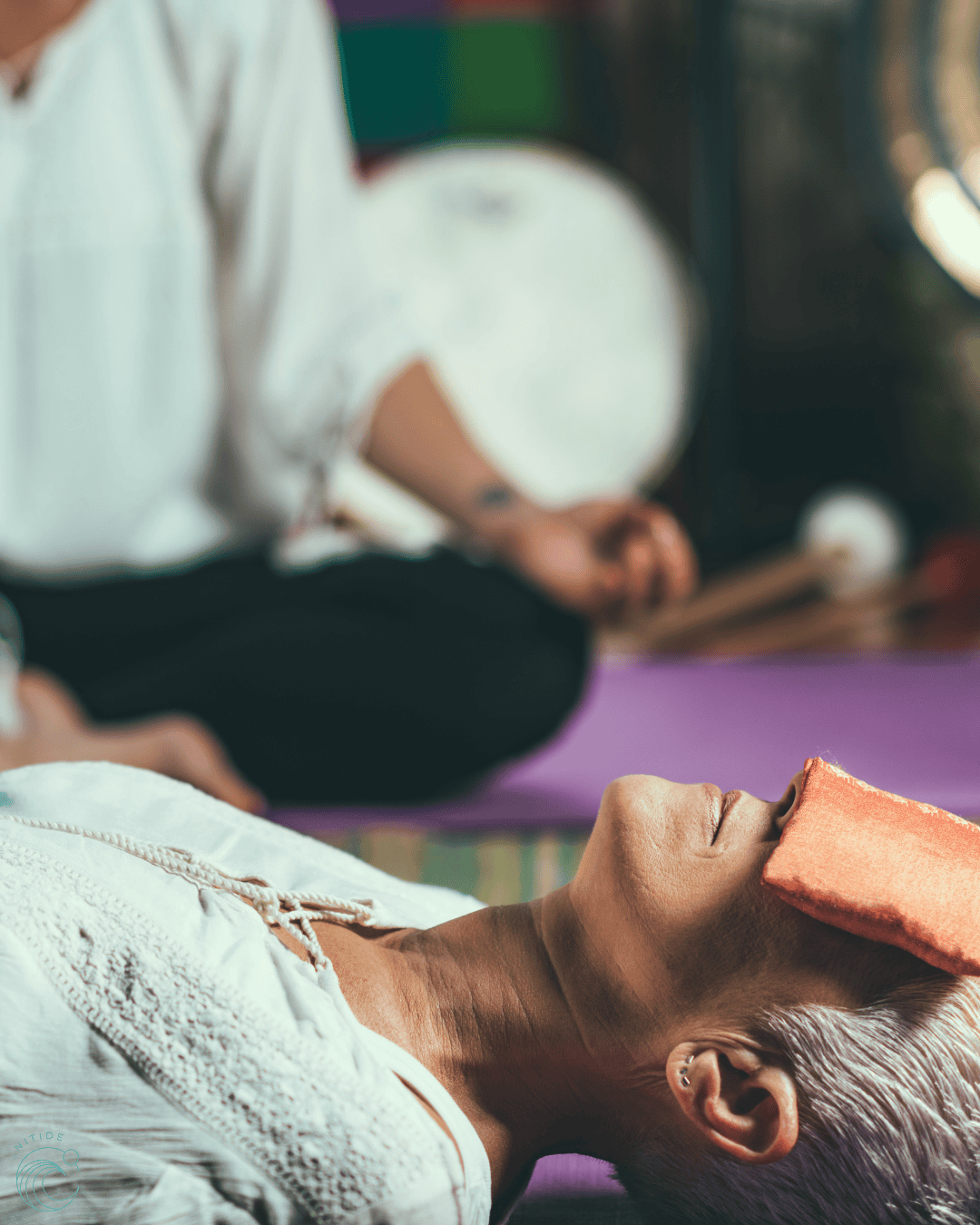
NSDR & Yoga Nidra:
How Guided Rest Can Transform Your Sleep
Many of us try to go from busy days straight into bed but a racing mind and stressed body rarely settle into deep sleep easily. That’s where practices like Non-Sleep Deep Rest (NSDR) and Yoga Nidra can change the game. These guided techniques are simple, accessible, and backed by both tradition and science.
1.What is Non-Sleep Deep Rest (NSDR)?
NSDR is a modern, science-backed relaxation practice popularized by Dr. Andrew Huberman of Stanford University. It involves lying down, closing your eyes, and listening to a guided script that takes you through body awareness, breath focus, and intentional relaxation.
Benefits of NSDR:
- Calms the nervous system → lowers cortisol so melatonin can rise naturally
- Boosts brain function → studies suggest NSDR improves memory and focus
- Relieves stress & anxiety → quiets the mind and helps ease tension
- Time-efficient → even 10–20 minutes can leave you feeling refreshed
What is Yoga Nidra?
Yoga Nidra, often called “yogic sleep,” is the traditional practice that inspired NSDR. It’s a guided meditation designed to bring you into a state between wakefulness and sleep. You don’t need any experience or equipment, just lie down and listen.
Benefits of Yoga Nidra:
- Improves sleep quality → helps people fall asleep faster and spend more time in deep sleep
- Balances hormones → reduces stress response, supports mood regulation
- Accessible to everyone → no movement required, simply follow the guidance
- Deep relaxation → calms body and mind more effectively than a short nap
NSDR vs Yoga Nidra: What’s the Difference?
The main difference is in approach.
- Yoga Nidra → ancient, rooted in meditation traditions, sometimes spiritual in nature
- NSDR → a modern, science-focused adaptation used widely in neuroscience and recovery research
Both lead to the same outcome: deep rest, reduced stress, and better sleep. You don’t need to choose, try both and see which resonates with you.
How to Get Started
- Set aside 10–20 minutes in the evening.
- Lie down in a quiet, comfortable place.
- Follow these links to our favourite guided NSDR & Yoga Nidra sessions.
- Let your body and mind soften into stillness.
Pro Tip: Pair your practice with a silk sleep mask to block out light and deepen the sense of calm.
Final Thoughts:
Better sleep isn’t just about when you close your eyes — it’s about how you prepare your body and mind. NSDR and Yoga Nidra are simple, powerful tools that calm your nervous system, reduce stress, and open the door to deeper, more restorative rest.
🌙 Try one tonight, and feel the difference.
Want more sleep science?
Check out our related posts:
3 AM Wake-Ups, Midnight Visitors, and the Magic of L-Theanine.
The Science Behind Adaptogens: Why they are key to managing stress

Wellness that moves with you.
Website design The Crayon Room
Wellness that moves with you.
Website design The Crayon Room